Research Work
GlucoCheck Voice Assistant (Hands-Free Diabetes Tracking for Older Adults)
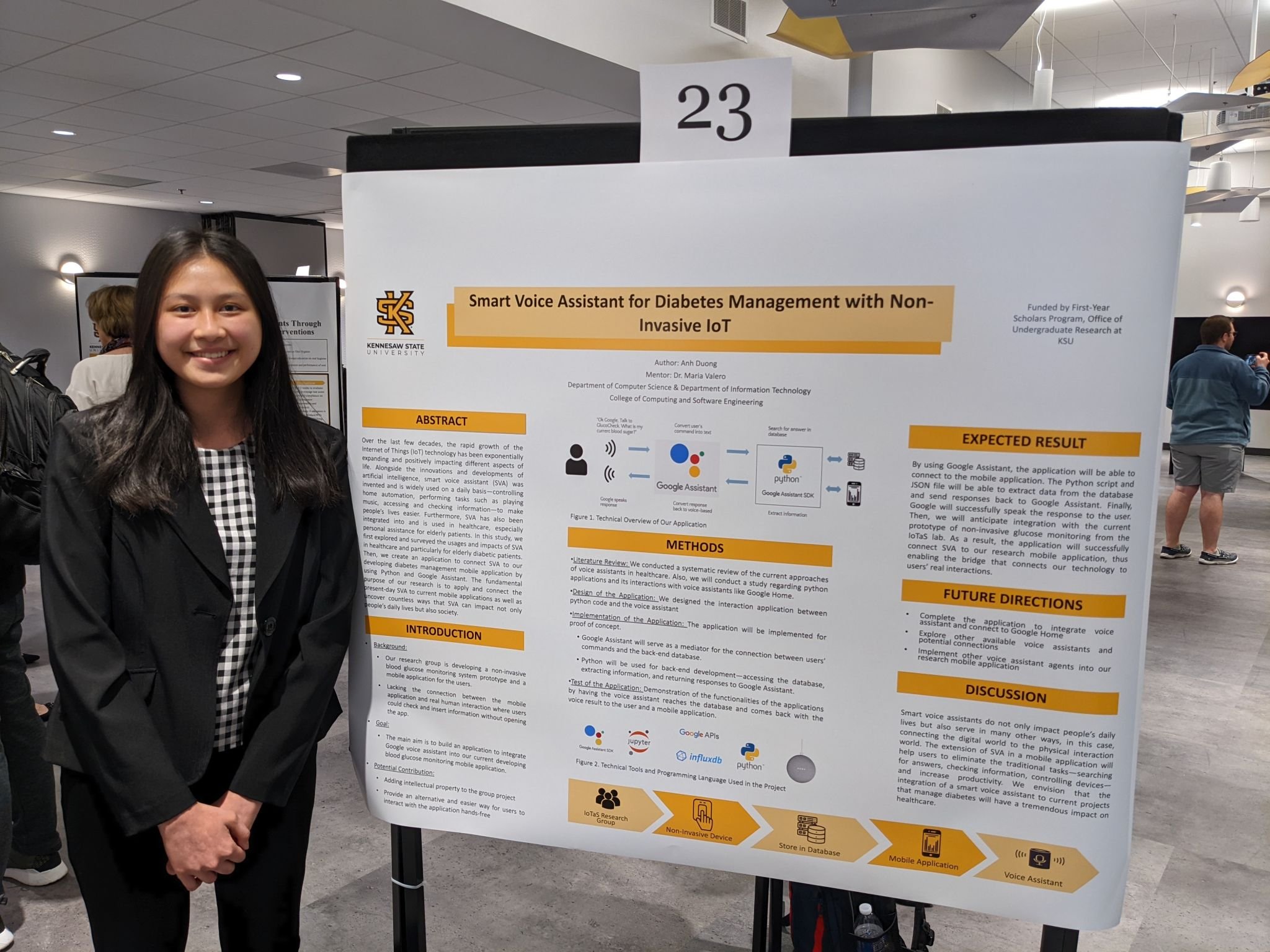
As part of GlucoCheck, the IoT as a Service (IoTaS) Lab’s non invasive glucose monitoring device, I developed and evaluated a voice assistant that enables older adults to track diabetes data hands free through Amazon Echo and mobile devices. I built a cloud based data pipeline using Python and AWS to support real time device integration and designed voice interactions that align with natural speech patterns. Through usability testing with 50+ older adults, I identified gaps between rigid command based systems and how users actually communicate, then redesigned the dialogue flow to prioritize intent over exact phrasing. This improved recognition accuracy to 98% and strengthened user confidence.
Publications:
Duong, A.; Valero, M. (2024). Usability of Voice Assistants in Healthcare: A Systematic Literature Review. PH 2023 (Springer LNCS). DOI: https://doi.org/10.1007/978-3-031-59717-6_25
Kazi, T.; Oakley, J.; Duong, A.; Belfasi, E.A.; Ingram, K.; Valero, M. (2024). Advancements in Non-invasive AI-Powered Glucose Monitoring: Leveraging Multispectral Imaging Across Diverse Wavelengths. AIME 2024 (Springer LNCS). DOI: https://doi.org/10.1007/978-3-031-66538-7_38
Valero, M.; Ingram, K.; Duong, A.; Nino, V. (2024). Pervasive Glucose Monitoring: A Non-invasive Approach Based on Near-Infrared Spectroscopy. PH 2023 (Springer LNICST). DOI: https://doi.org/10.1007/978-3-031-59717-6_19
Presented at:
IEEE EMBS International Conference on Biomedical and Health Informatics (BHI), 2023
Kennesaw State University Symposium of Student Scholars, 2022
Designing a Trauma-Informed Digital Mental Health App for College Students
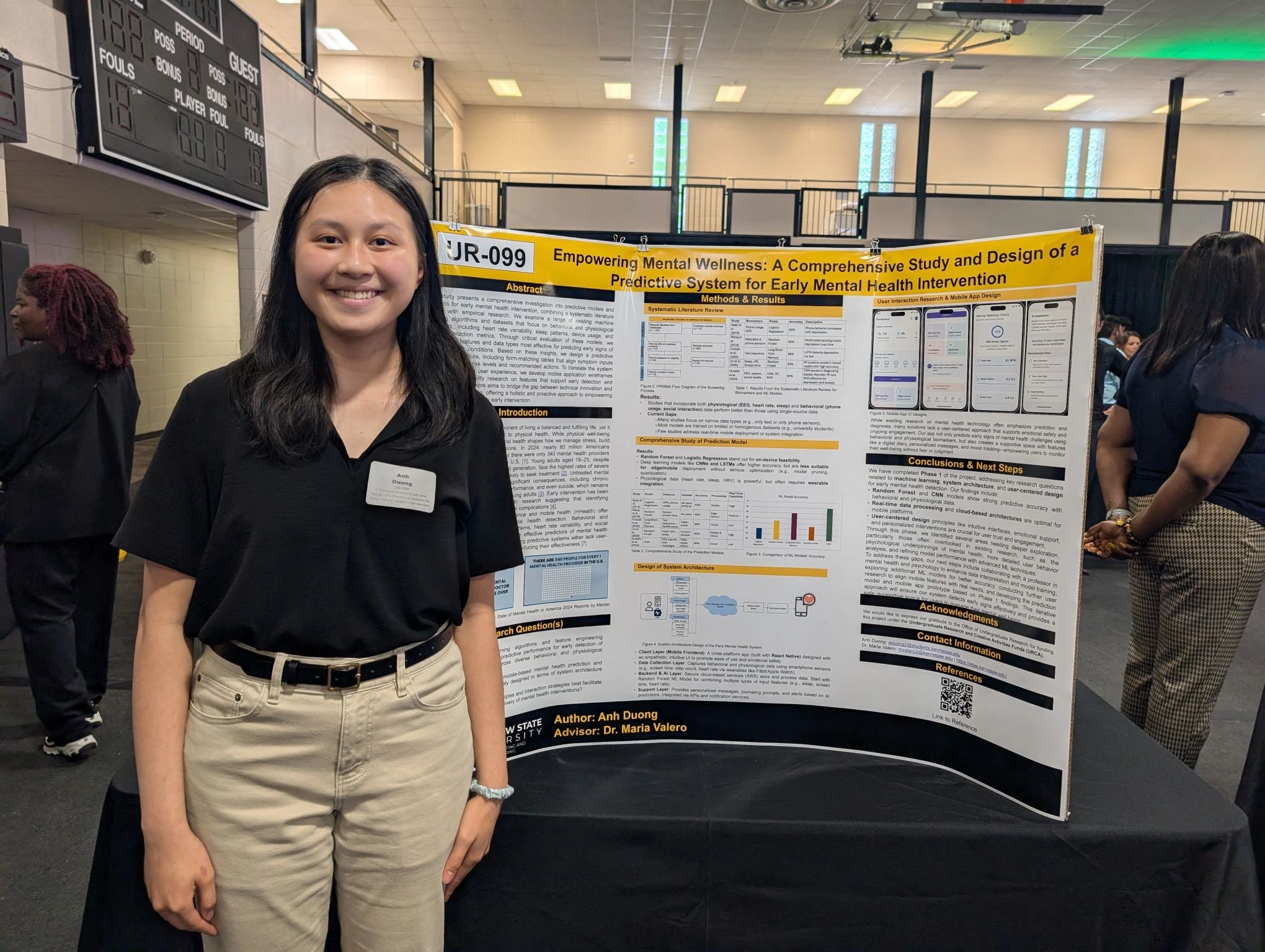
I led the design of a mobile mental health application aimed at supporting college students by translating insights from qualitative research into user-centered features that address barriers such as stigma, lack of accessible resources, and limited engagement. Drawing on a systematic review of mental health support needs and iterative prototyping, I developed wireframes and interaction flows that integrated customizable wellbeing tools, consolidated campus resources, mood tracking, and community building elements into a cohesive app experience. This work reflects a trauma-informed, participatory approach to design, centering co-design insights and real user needs to create a tool that supports early intervention and ongoing emotional wellbeing.
Presented at:
Kennesaw State University Computing Showcase, 2025 — 🏆 2nd Place
Establishing and Evaluating a GenCyber Camp for Underserved High School Students: Curriculum Design and Inclusion Strategies
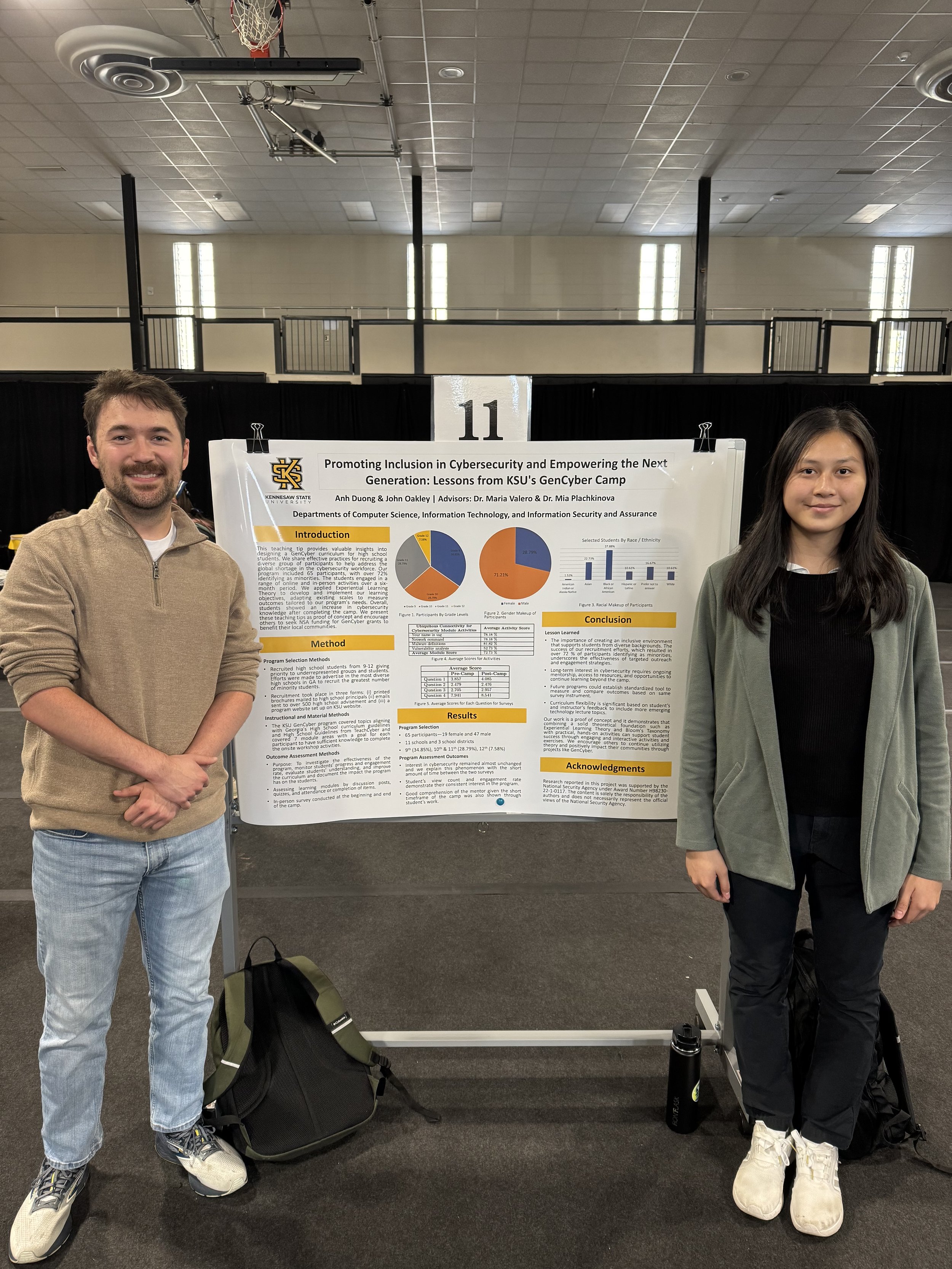
I collaborated with faculty PIs to design and refine curriculum modules and hands-on cybersecurity activities for Kennesaw State University’s GenCyber student camp, an NSA and NSF sponsored program that broadens participation in cybersecurity for underrepresented high school students. My focus was translating complex, abstract security concepts into interactive, easy-to-digest learning experiences that support digital literacy, confidence, and sustained engagement. The camp served 65 students, with over 72% identifying as minorities, and participants showed increased cybersecurity knowledge and strong interest in cybersecurity pathways after the program. Following the camp, our team analyzed curriculum structure, engagement patterns, and learning outcomes to document effective practices and share a teaching tip that can help other institutions design inclusive GenCyber programming.
Publications:
Duong, A.; Valero, M.; Oakley, J.; Plachkinova, M. (2025). Teaching Tip: Establishing a GenCyber Student Camp for High School Students in Underserved Communities. Journal of Information Systems Education, 36(4), 367–378. DOI: https://doi.org/10.62273/IYTO9802
Presented at:
Kennesaw State University Symposium of Student Scholars, 2024 — 🏆 1st Place
Projects
Designing a Community-Engaged Digital Support App for System-Impacted Youth
I joined Fresh Lifelines for Youth (FLY) through Develop for Good as a UX designer on a six-person design team to support FLY’s mission of empowering system-impacted youth and advancing justice. Grounded in HCI, trauma-informed design, and community-engaged methods, I contributed to designing a mobile app concept that supports youth mental wellness alongside case management and legal education by translating psychosocial needs into accessible, low-burden digital experiences. Our team conducted co-design sessions and qualitative research with stakeholders to surface lived experience needs, then synthesized findings through affinity mapping and iterative design reviews to shape features that promote reflection, emotional regulation, and sustained engagement in high-stress contexts. I built and refined user flows, wireframes, and high-fidelity prototypes in Figma, and supported usability testing to evaluate clarity, comfort, and adoption barriers, ensuring the experience prioritized trust, psychological safety, and real-world usability for underserved youth communities.
Social Fusion: Human-Centered AI for Social Confidence and Event Matching
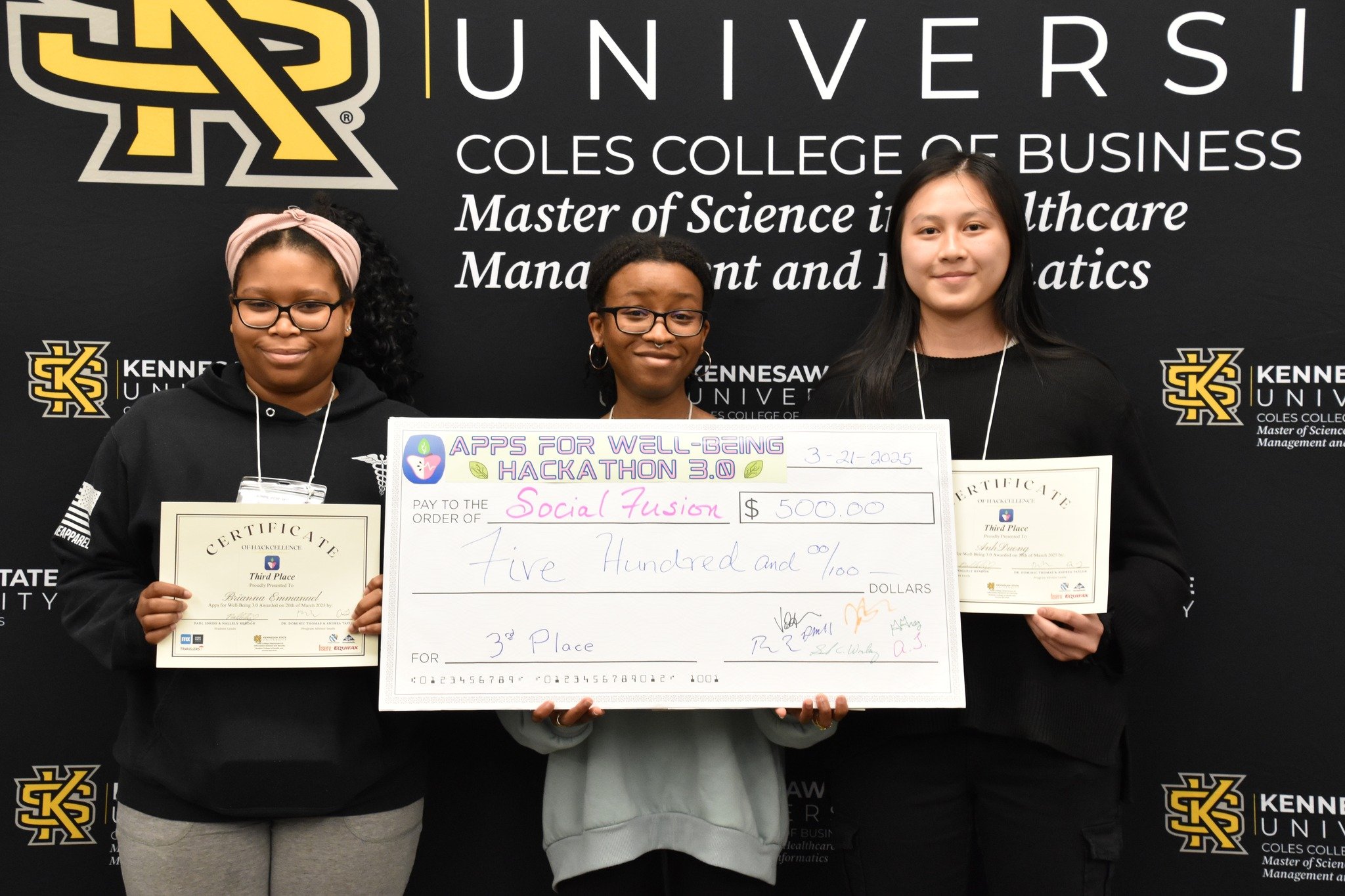
Social Fusion is a mobile app concept my team of three developed to support people experiencing social anxiety by combining AI-supported practice with a user-centered community and event matching experience. Using an HCI-driven workflow, we translated wellbeing goals into concrete interaction design requirements, then iterated on core flows such as onboarding, confidence-building practice, and personalized recommendations. I contributed to the end-to-end UX process by creating user flows and high-fidelity prototypes in Figma and implementing the interactive prototype in Mendix to validate feasibility and demonstrate realistic interactions. The project earned 3rd Place at the KSU Apps of Well-Being Hackathon out of 51 teams and was presented to a panel of 10 academic and industry judges (including representatives from Tokio Marine HCC, Fiserv, Travelers, and Equifax).
Graphic Design
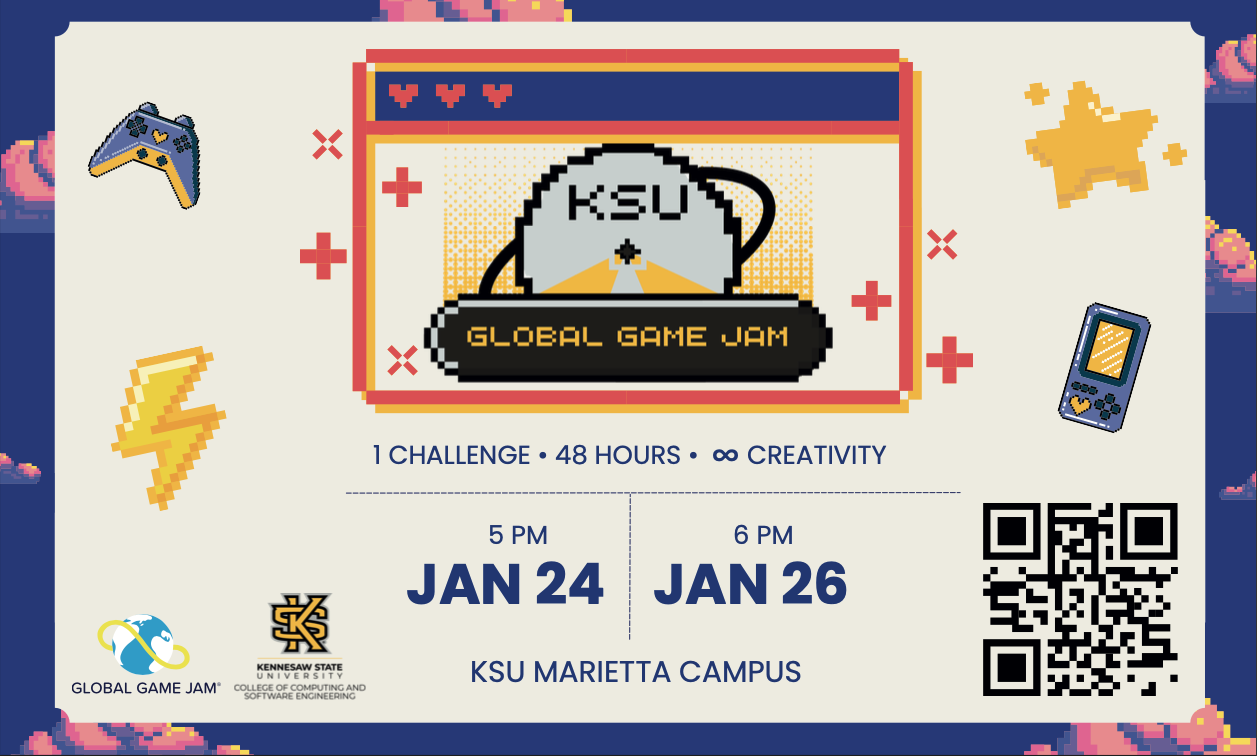
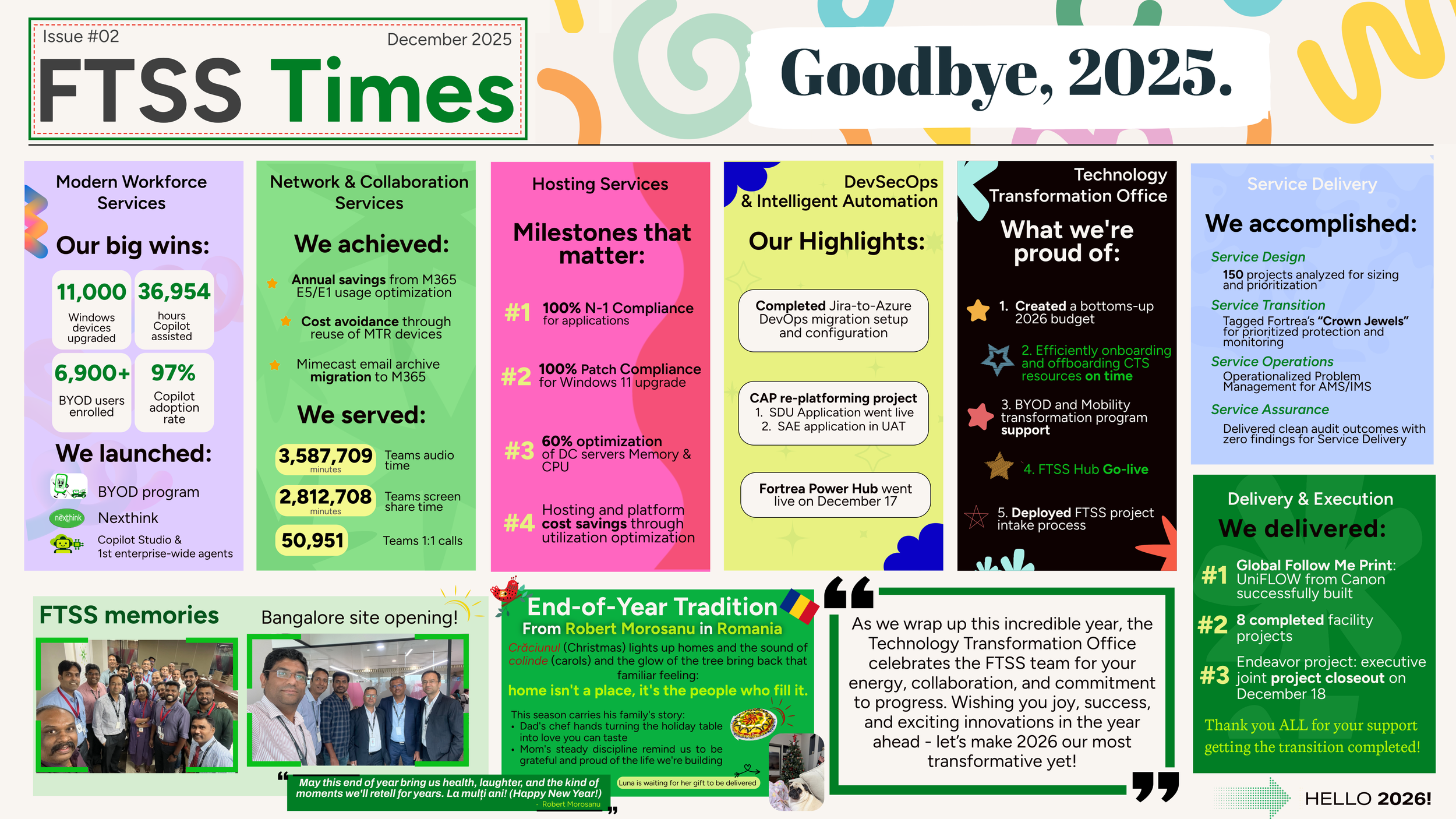
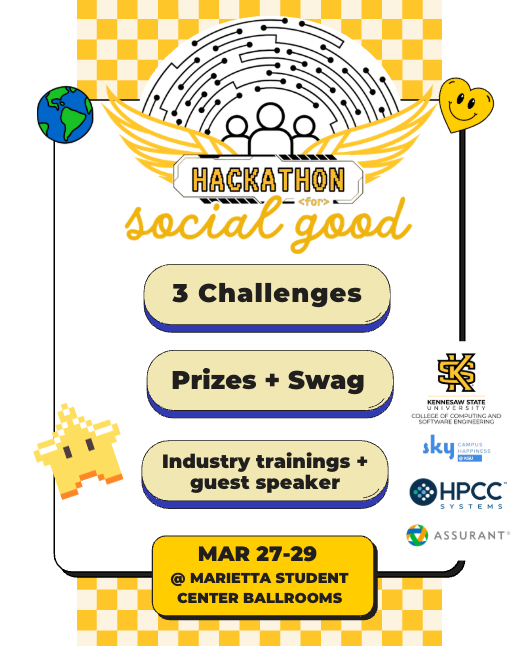
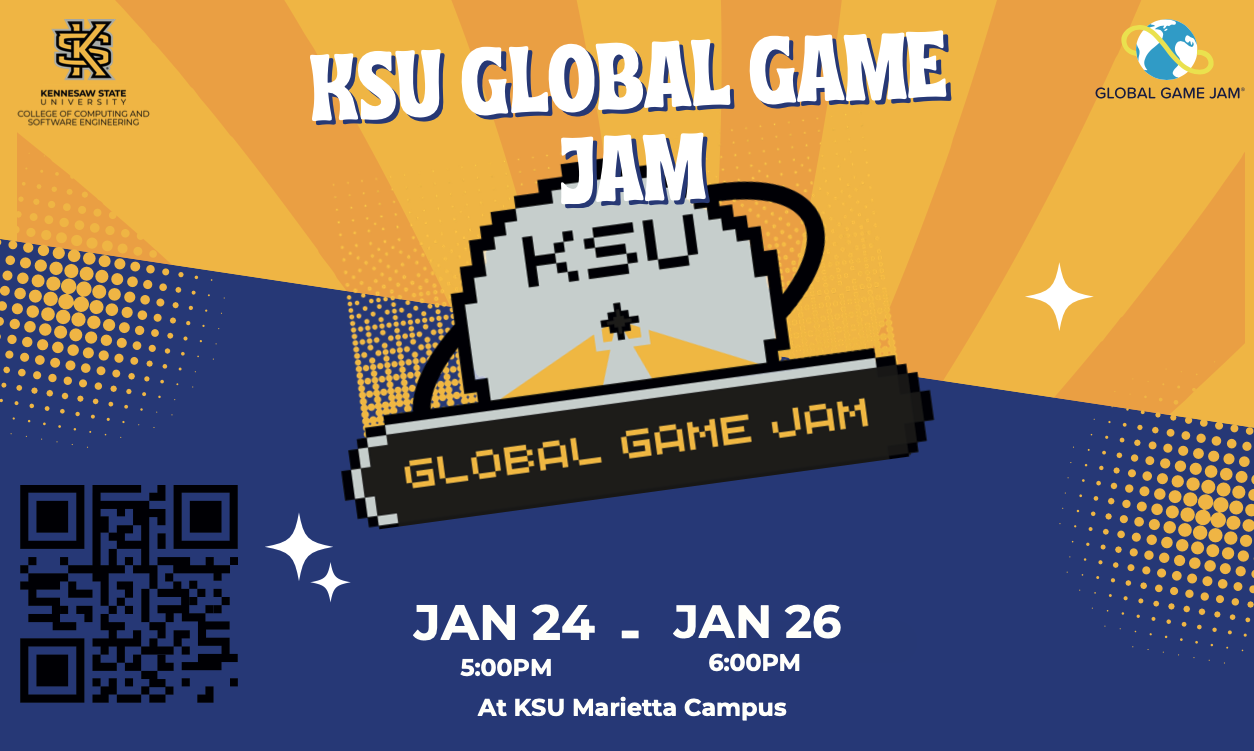
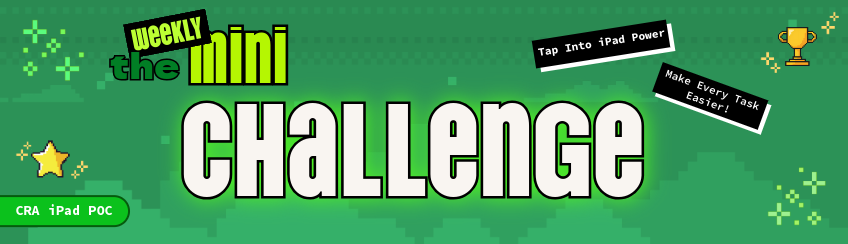
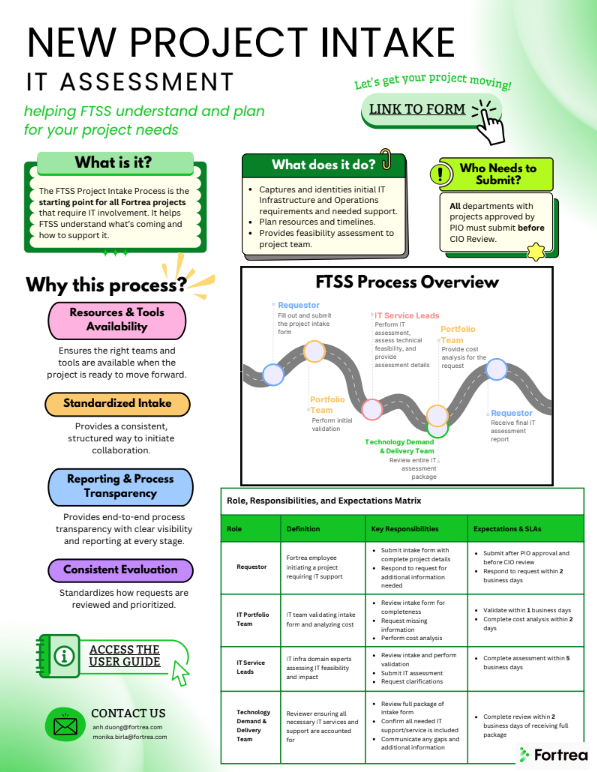
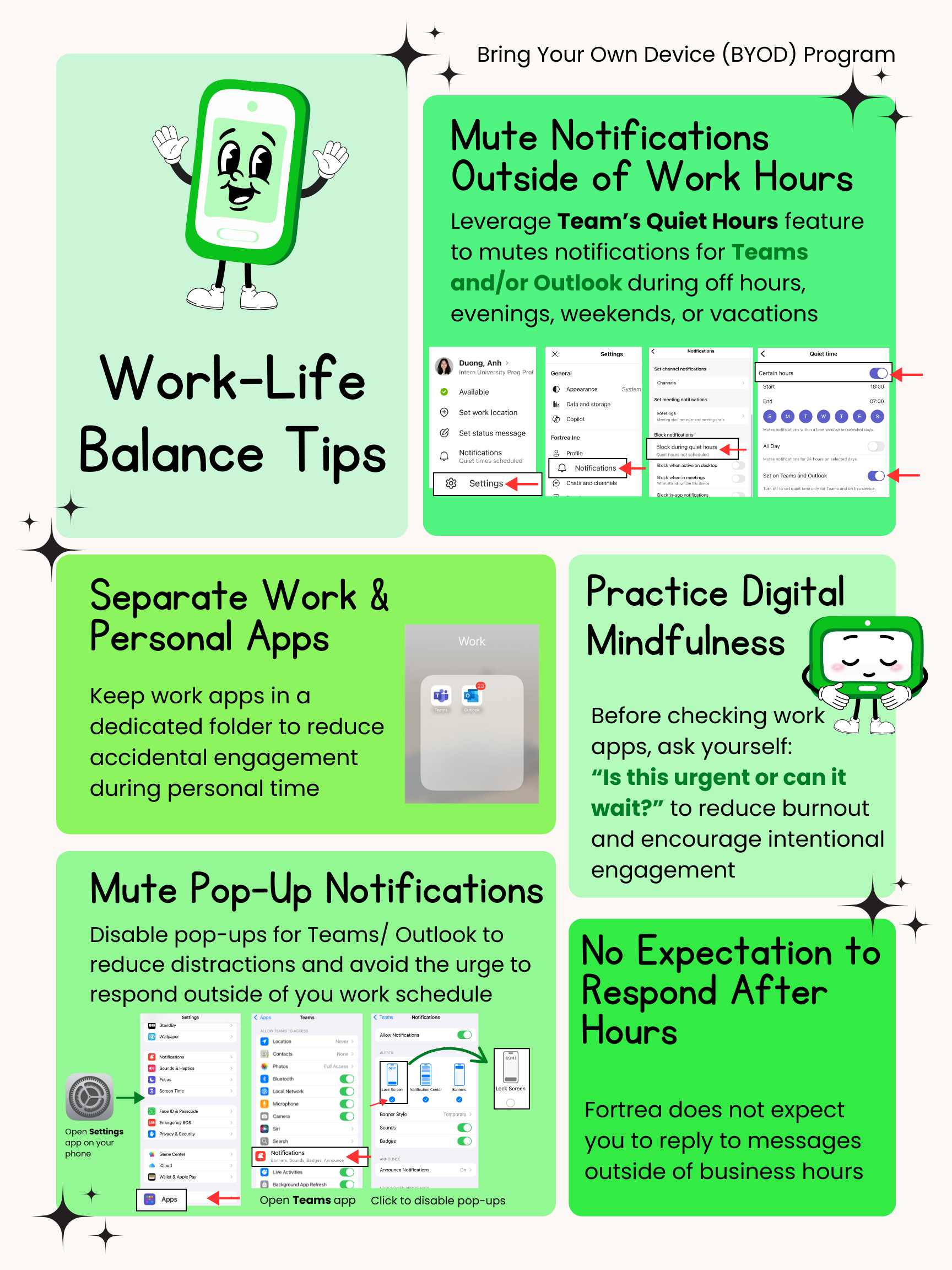

Graphic Design
is both a hobby and a way I support the communities I’m part of. I love creating flyers, infographics, and visual assets that make information more approachable and help teams communicate with clarity and impact. These are a few selected pieces I’ve created across academic and professional settings.